
Rest In Power Rev. Jesse Jackson: A Conservative's Tribute to Decency Over Division
How Meeting Rev. Jesse Jackson Inspired Me to "Keep Fighting the Good Fight"

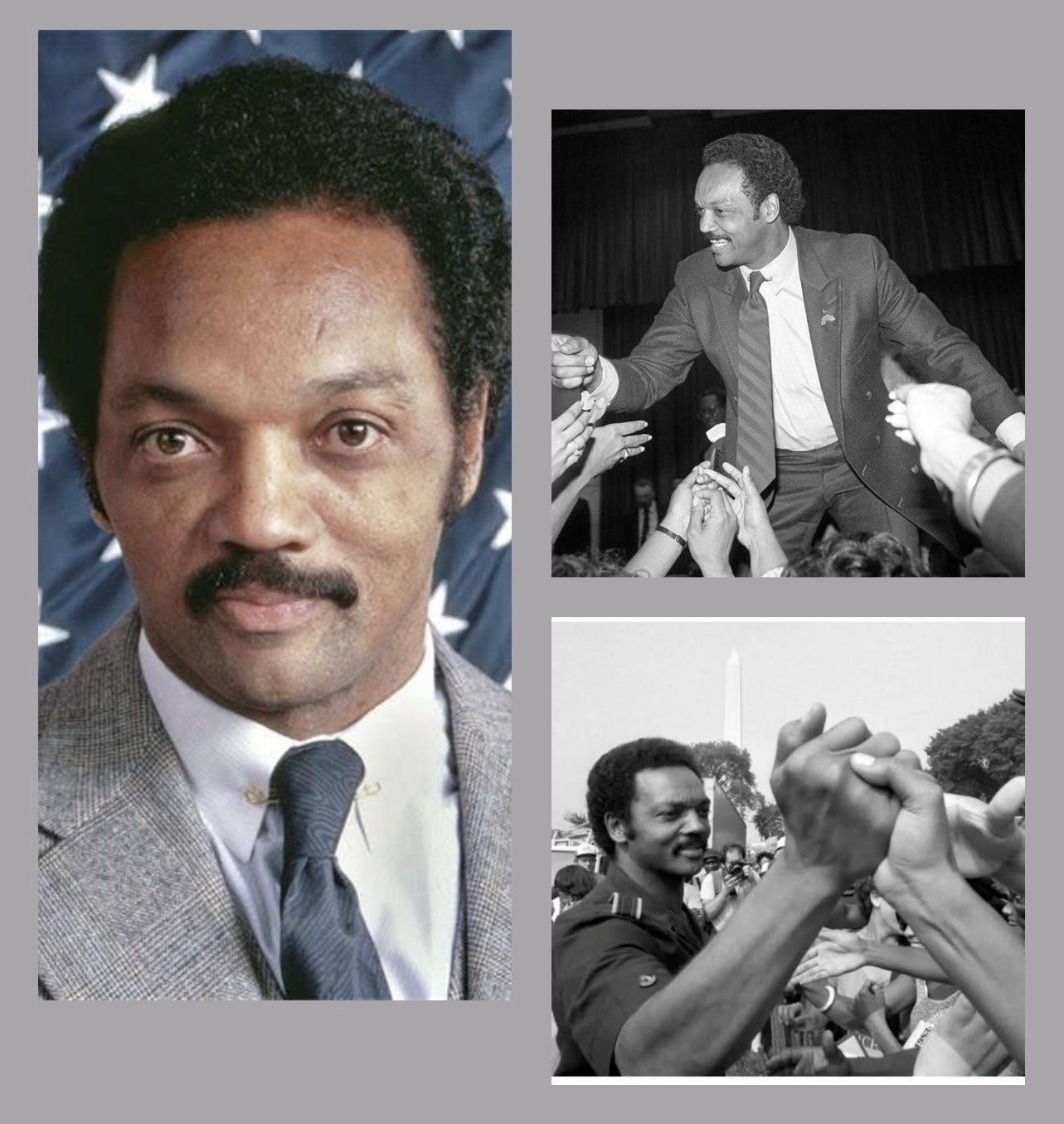
Woke up this morning to the news that Rev. Jesse Jackson has passed away. Man, this one hits heavy. The passing of Rev. Jesse Jackson, at the age of 84, marks the end of an era for American civil rights activism. As a conservative who’s grown weary of the endless arguing about B.S. that doesn’t matter, ridiculous name-calling, and the tribal warfare that passes for political discourse these days, I find myself reflecting on what this towering iconic figure, often on the opposite side of the ideological aisle from me, can still teach us about unity in our hyper-polarized time.
I’ve met Rev. Jackson a couple of times. We had short conversations; nothing profound in the grand scheme, but memorable, nonetheless. The first time we met, I was upfront about my conservative views, while also making it clear that I deeply respected his sacrifices and activism. I explained that, despite our different political affiliations, I resonated with many of his core initiatives, particularly those focusing on self-help, entrepreneurship, accountability, and elevating Black political power through traditional means.
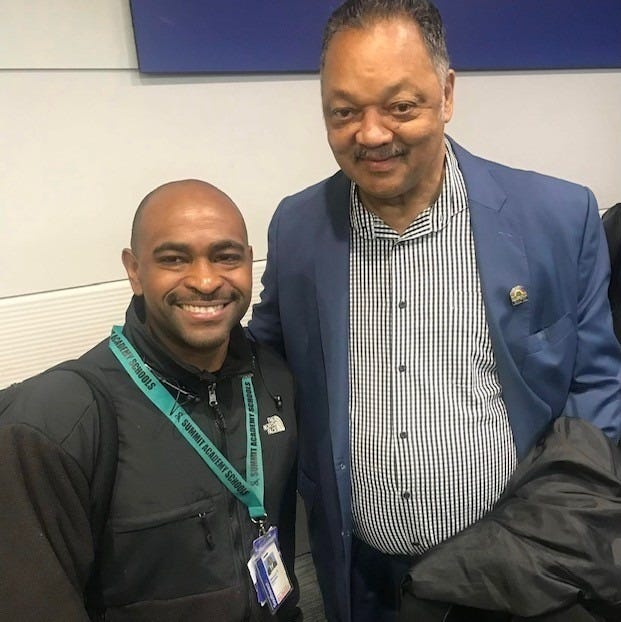
There was no condescension, no lecture on why my views were wrong. Just genuine encouragement. He just gave me that big “Jesse smile,” locked eyes, and said, ‘Thank you. You’re a smart young man. Keep fighting the good fight.’ No shade, no judgment, just pure respect. That moment stuck with me. In a world where political differences now feel like personal betrayals, Jackson treated disagreement as something navigable, not nuclear. This is particularly true in the Black community.
Today, we’re drowning in pettiness. Social media amplifies every hot take into a battlefield. Politicians on both sides demonize the other as an existential threat rather than fellow citizens with different priorities. Left calls right fascists; right calls left communists. Family dinners turn into minefields. Friendships end over votes. It’s exhausting, childish, and frankly, beneath us as Americans. We’re better than this constant zero-sum game where winning means the other side loses everything.
Jackson’s life offers a counterpoint, even if his politics leaned heavily progressive. He built his legacy on the Rainbow Coalition, which was a deliberate effort to pull together unlikely allies such as working-class Whites, Black communities, Hispanics, Asians, farmers, laborers, and the poor at large. He didn’t pretend differences didn’t exist; he acknowledged them, faced them head-on, and still sought common ground. In his famous 1988 Democratic National Convention speech, he spoke of a “patchwork quilt” of America: “Blacks and Hispanics, when we fight for civil rights, we are right, but our patch is not big enough. Gays and lesbians... your patch is not big enough.” He extended that to conservatives and progressives: “When you fight for what you believe... you are right from your point of view, but your point of view is not enough.”
That line hits hard right now. Jackson’s approach reminds us that moral clarity on issues like life, family, free enterprise, or limited government doesn’t require scorched-earth rhetoric. We can hold firm convictions without treating half the country as irredeemable. Jackson fought fiercely for economic justice, voting rights, and against poverty, yet he framed it as expanding opportunity for everyone, not pitting groups against each other in endless grievance competitions.
One of his enduring messages was “keep hope alive.” It’s easy to dismiss as slogan, but in practice, it meant refusing to let cynicism win. He believed in America’s promise enough to challenge it relentlessly, but never to abandon it. Conservatives often champion personal responsibility, self-reliance, and the dignity of work, values that align more than we admit with Jackson’s calls to lift people out of dependency through opportunity, not handouts alone. He pushed for coalitions that included the forgotten working class, something many on the right have echoed in recent years with appeals to blue-collar voters tired of elite indifference. H
In our current mess, unity doesn’t mean agreement on everything. It means recognizing shared stakes: strong families, safe communities, economic mobility, secure borders, and a nation where kids inherit something better than division. Jackson’s era showed that bridging divides requires leaders willing to talk to the “other side” without immediate suspicion. He met with adversaries, negotiated, and sometimes compromised. This wasn’t because he was weak, but because he saw the bigger picture.
Contrast that with today’s landscape. We reward outrage merchants who thrive on clicks and donations from fear. Politicians and pundits throw insults at one another instead of debating ideas. Activists demand purity tests that shrink coalitions rather than grow them. This has resulted in gridlock, distrust, and a country that’s angrier and more divided than ever.
Jackson’s example challenges those of us who are conscious to ask tough questions. Are we building bridges where we can, or are we content with our own echo chambers? Do we really want solutions, or are we looking to just bitch about problems and one-up the other side? His Rainbow Coalition wasn’t perfect. It had its critics, including myself and even folks from within civil rights circles who saw it as too politically expedient. But the intent was noble: unite around common struggles like jobs, education, and fairness under the law. Conservatives and liberals alike can adapt that spirit without abandoning principles.
This isn’t about going soft or “compromising” core beliefs. It’s about maturity. Jackson didn’t water down his activism; he amplified it by refusing to let division define him. He marched with Dr. King, ran for president twice, founded Rainbow PUSH, and kept advocating long after many would have retired. Through it all, he preached interdependency: “We must turn to each other and not on each other.”
As we mourn his passing, may his soul rest in peace. His legacy, though flawed, was undeniably impactful and deserves to endure. In this climate of political fatigue, perhaps the best tribute is to take his call seriously. Stop the petty childishness. Fight hard for what we believe, but recognize that real progress comes from coalitions, not conquests. Talk to the “other side” like Rev. Jackson talked to a conservative young man he barely knew, with respect, encouragement, and a shared commitment to a better America.
We don’t have to agree on policy to agree on decency. In a hyper-polarized age, that’s the real fight worth winning. Keep hope alive and keep fighting the good fight, together where we can.
Like what you read? Give it a like. Share this story within your network. Contribute to the discussion.